I am currently at work on my first novel. My writing has appeared in The Washington Post, The South China Morning Post, Tank Magazine and on National Public Radio as well as New York’s WNYC and WQXR, classical radio.
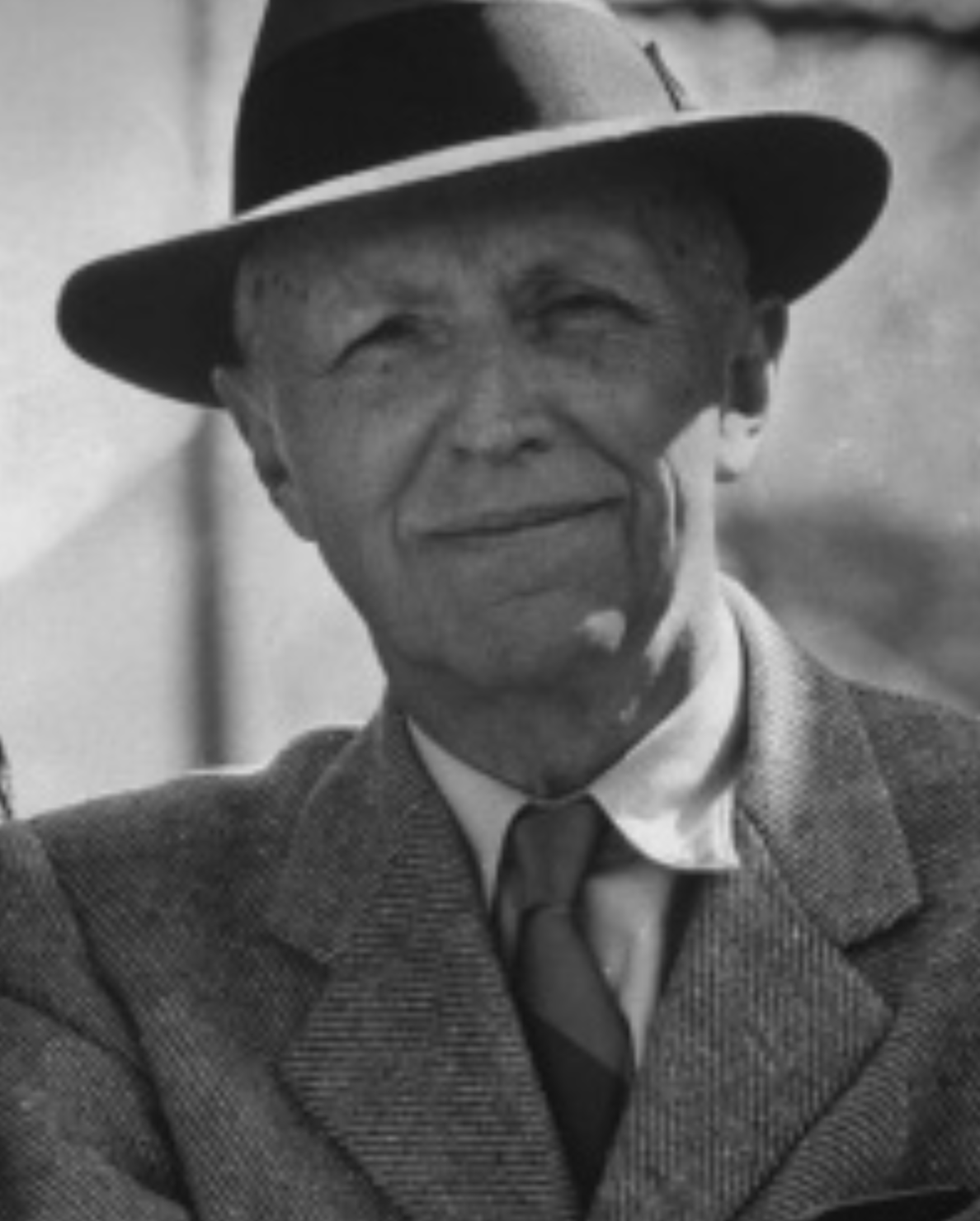
The novelist Conrad Richter was born today in 1890 in Pine Grove, Pennsylvania. The child of preachers, his family hopscotched coal-mining towns with extended members working as soldiers, country squires, blacksmiths, and farmers.
“I think that in my passion for early American life and people,” Richter said, “I am a throwback to these people.”
Richter moved to New Mexico just ahead of the Great Depression, turning out his first novel, The Sea of Grass (1936). The work is rife with pioneer life in the Southwest, its land and folklore. Richter went on to produce his Ohio trilogy, known as The Awakening Land, featuring The Trees (1940), The Fields (1946), and The Town (1950), which won the Pulitzer Prize.
Richter long struggled with a sense of disappointment for having never achieved the level of popular writerly success he had hoped. After sales figures of The Trees failed to reach projected heights, his close friend and editor Alfred A. Knopf wrote to him:
“I think you must reckon the archaic language which you deliberately adopted a commercial handicap. I don’t question its artistic advisability mind you, but I think you must reckon on the sacrifice involved. I think also that The Trees suffered rather from lack of action and story, and gave the reader not enough narrative to bite into and something of the impression of being an overture rather than the main show.”
An excerpt from his 1940 work, The Trees, reads, “Everywhere she went the trees stood around her like a great herd of dark beasts. Up and up shot the heavy butts of the live ones. Down and down every which way on the forest floor lay the thick rotting butts of the dead ones. Alive or dead, they were mostly grown over with moss. The light that came down here was dim and green. All day even in the cabin you lived in a green light.”
One of the many things I love about being an English teacher is the way we sit down as colleagues, typically late Spring, to discuss the books we’ll teach in the coming year. It’s fascinating to track both the national mainstays (The Crucible, Frankenstein, The Scarlet Letter) and those that are more regionally specific.
I’m happily in Cape Cod, so a salty nautical theme runs fast and furious. We have The Old Man andthe Sea, so accessible and haunting, The Odyssey (duh) as well as new advocacy this year for Moby Dick (regionally relevant? Absolutely! Narratively? Challenging! Student engaging? We will see!)
I laughed with another English teacher this afternoon about the rightful endurance of Melville’s text, one everyone loves to say they have read, but no one ever seems to currently bereading.
More broadly, I am stunned by the publishing world, its enormous challenge, its infinitesimal chance. Just to publish anything with one of the major houses is an absolutely herculean achievement, worthy of taking lots of time off by the sea with all the lobster rolls and plenty of ice cream from Four Seas just to celebrate the jolly feat of having slipped through the barricades, making it to print. So few ever do!
Then there is the yet more infinitesimally slim, still greater herculean achievement of making it from the American bookshelf into the American classroom. Your work is being taught. Imagine. It is not lost on me that most of our texts were drafted by the long deceased, but of course we teach living writers all the time. One colleague is introducing Michelle Zauner’s Crying in H-Mart next year. A few years ago I brought Kevin Powers’ war novel The Yellow Birds into the New York public school system. These are all wins.
For as hard as it is to get published AND catch the attention of the teaching world—for your book to take flight in the classroom canon—I’m struck by the fickle hand of chance that is at play in all of this. As in, you’re just sitting in a meeting, the question gets asked generally (“Anyone want to introduce a new text next year?”), you briefly make your case, and boom! It’s in. Teachers rarely feel powerful, exactly, and this is indeed a moment to savor. Next thing you know, the list gets finalized, the order goes out, and you have cemented a new text into the order of business for the coming year. The whole thing goes down in less than ten minutes!
Yes, yes, we are ever mindful of how and why we make these bids. The book must be appropriate, in every sense of the word. It must be teachable. That is to say—given to assignments. To probing. To in-class examination and engaging classroom discussion. This is, of course, the work of the teacher, but some texts are undeniably better suited to being taught than, well, others. I’d love to teach Joseph O’Neill’s Netherland with all its melancholy evocation of a post-9/11 New York, but there’s just no way. The Great Gatsby (on which O’Neill has said he loosely based Netherland) remains a standard bearer in the American classroom to a large extent because 1) it is a very good length, 2) the characters are clearly sketched out and positioned well against each other, and 3) the themes are both relatable and aspirational. Lol, the green light and all that.
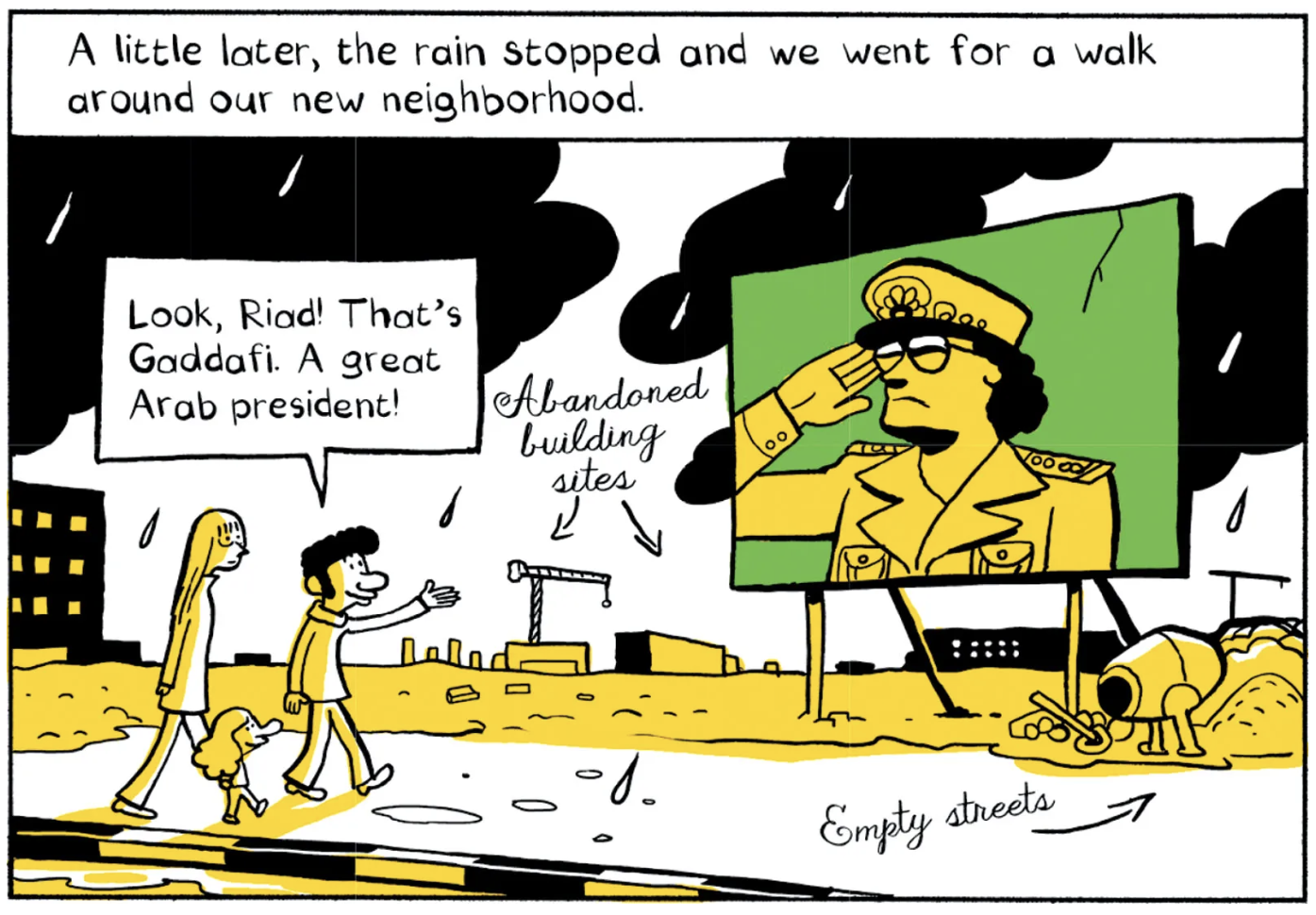
One text I advocated for this year, but sadly not for my own classes (might try to sneak it into my Grade 12 world lit course?) is Riad Sattouf’s The Arab of the Future. The first four volumes of this work are now out in English translation, and I’m dying to read the fifth. Translators of the world, stand up!
A graphic novel of a childhood in Libya and Syria, The Arab of the Future is full of the salt-sweat of elders, the curious textures of new meals, the frenzy of local educational practices in these two Middle Eastern countries.
Sattouf (in gamine profile here in the New Yorker and TAOTF reviewed here by the NYR) is half-French, and periodically returned to see his mother’s family in Lyon. So he maintains a one-foot-in, one-foot-out perspective on his Syrian father’s proclamation that he is, in fact, the Arab of the future. What he is, most immediately, is the observant child in between. His takes are by turns detailed, hilarious, macabre, frank, guarded, silly, serious and endlessly fresh.
I love every panel of The Arab of the Future and can’t wait to bring it to my sea-side students next year! Onward!
The disasters of our lives are the opportunities of our lives.
Have you ever felt this way?
The perspective is a practice, an essential, constant commitment.
Getting bad news is never fun. It doesn’t feel good, never in the moment. And that’s okay. Feel the pain and the sorrow. Recognize the feelings as one does the bone-ache of growing pain. Pause and reflect.
Read widely and value the diverse voices and perspectives on hardship that you encounter. One must take time to process information as we seek it out or as it comes to us, through which we continue to reach and develop. This is the way.
Then, take a step. Another step. Dare yourself to leap. Fall down. Be on the floor for a while if you need to. Then, when you are ready, but always—get back up. Recommit to yourself.
You are worth it, in every way. You are your own most precious resource and renewable energy. An infinite geyser of chance. You can overcome the thing you fear the most.
I know you can.
I believe in you.
Now, begin. Begin again.
Again and again—begin.
As you do so, take a look at the lyrics to Simon and Garfunkel’s AMERICA. Notice the courage and fortitude. So forthright, so bold. So unafraid. It’s remarkable.
You can do this.
**
“Let us be lovers, we’ll marry our fortunes together I’ve got some real estate here in my bag” So we bought a pack of cigarettes and Mrs. Wagner pies And walked off to look for America
“Kathy”, I said as we boarded a Greyhound in Pittsburgh “Michigan seems like a dream to me now” It took me four days to hitchhike from Saginaw I’ve gone to look for America
Laughing on the bus Playing games with the faces She said the man in the gabardine suit was a spy I said “Be careful, his bowtie is really a camera”
“Toss me a cigarette, I think there’s one in my raincoat” “We smoked the last one an hour ago” So I looked at the scenery, she read her magazine And the moon rose over an open field.
“Kathy, I’m lost”, I said, though I knew she was sleeping I’m empty and aching and I don’t know why Counting the cars on the New Jersey Turnpike
They’ve all come to look for America All come to look for America All come to look for America
It’s cold and rainy up in Cape Cod and I’m sticking close to home, working on a long-haul project. Feels good to be near the Atlantic, with a hot water bottle at my feet and a pile of thick blankets. I want to meet a few writing goals today, then treat myself to a slab of fresh salmon from Cape Fish & Lobster— the best of the best.
It’s always a good idea to treat yourself to a nice slab of salmon, no matter what’s going on in your life. I hope things are going well, and that the things that might not be going so well turn around again soon. I believe in you.
It was great fun to receive a writer’s package in the mail from Mumbai, India the other day– the latest from Poet’s Choice (dig that postage!) It’s always nice to be included in things, if it’s an anthology or a birthday party or whatever. People want to be included, not excluded, from that which is soul-affirming in this world. Even I know that, and I was recently informed that I “lack all people skills” by someone who has “exceptional people skills” so I’m excited to confirm this hard-fought wedgeling of insight. Take it with a grain of salt. Chase with tequila.
Below is my latest poem, out now from Poet’s Choice: “Free Range” (2023).
Always happy never sad. Always delighted never disappointed. Always mindful never forgetful. Always grateful never begrudging. Always open never closed. Always fresh never spoiled. Always helping never helped. Always wandering never lost. Always curious never complacent. And always, always, thrilled to be featured in Little Patuxent Review, never anything less.
In thePoet’s Corner of the Cathedral of St. John the Divine in New York City, pause to find Plath’s stone laid bare. Carved upon it is the opening line from her poem, “The Moon and the Yew Tree”:
This is the light of the mind, Cold and planetary
There will never be a greater statement made in this or any language, for here is an intergalactic declaration of independence.
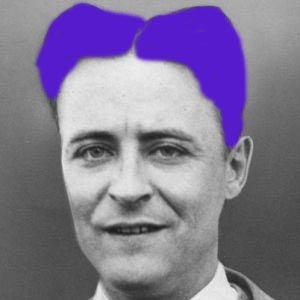
It is late-fall in New York and I’m in a flap of a mood having found a stack of rare and original papers in Columbia’s Butler Library with titles like “The Notebooks of F. Scott Fitzgerald” and “Conversations with F. Scott Fitzgerald”. The best of the writings deal with Fitzgerald before Zelda and, in the coming freeze of the season, I like hearing from the man himself about how he held together through hot transitions, time, and matters of the heart. Fitzgerald knew something about pain. Continue reading →
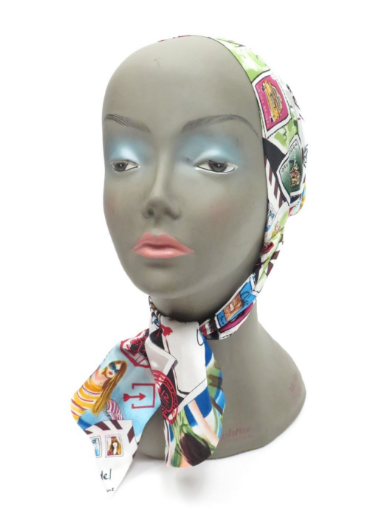
Married domestic by day, dashing secret agent by night, Pamela has done and seen it all. But the years have taken their toll, and it is finally time to hand the work over to young blood. In this exclusive exit interview, Pamela describes her closest calls, her greatest exploits, and the trip to Paris that nearly did her in.
Here’s my little quixotic, rhapsodic essay on life at the (now-quaint?) point of week 7 in quarantine, as we lived it in Utrecht, Holland. Published by The Farmer General, which casts a culinary eye upon the world, my focus was on food, comfort, and finding meaning in the quotidian during troubled times. Real talk: it was just another excuse to thumb through Amanda Hesser’s 2004 memoir-cum-cookbook, Cooking for Mister Latte, in which she waxes on about salt air and fresh oysters and little butter and prosciutto sandwiches for long airplane rides… I’ve basically been trying to be her intern these 16 years since. No word on that as yet, but I will surely keep you posted on my progress…






 Married domestic by day, dashing secret agent by night,
  Here’s my little quixotic, rhapsodic essay
 Caroline M Cooper