
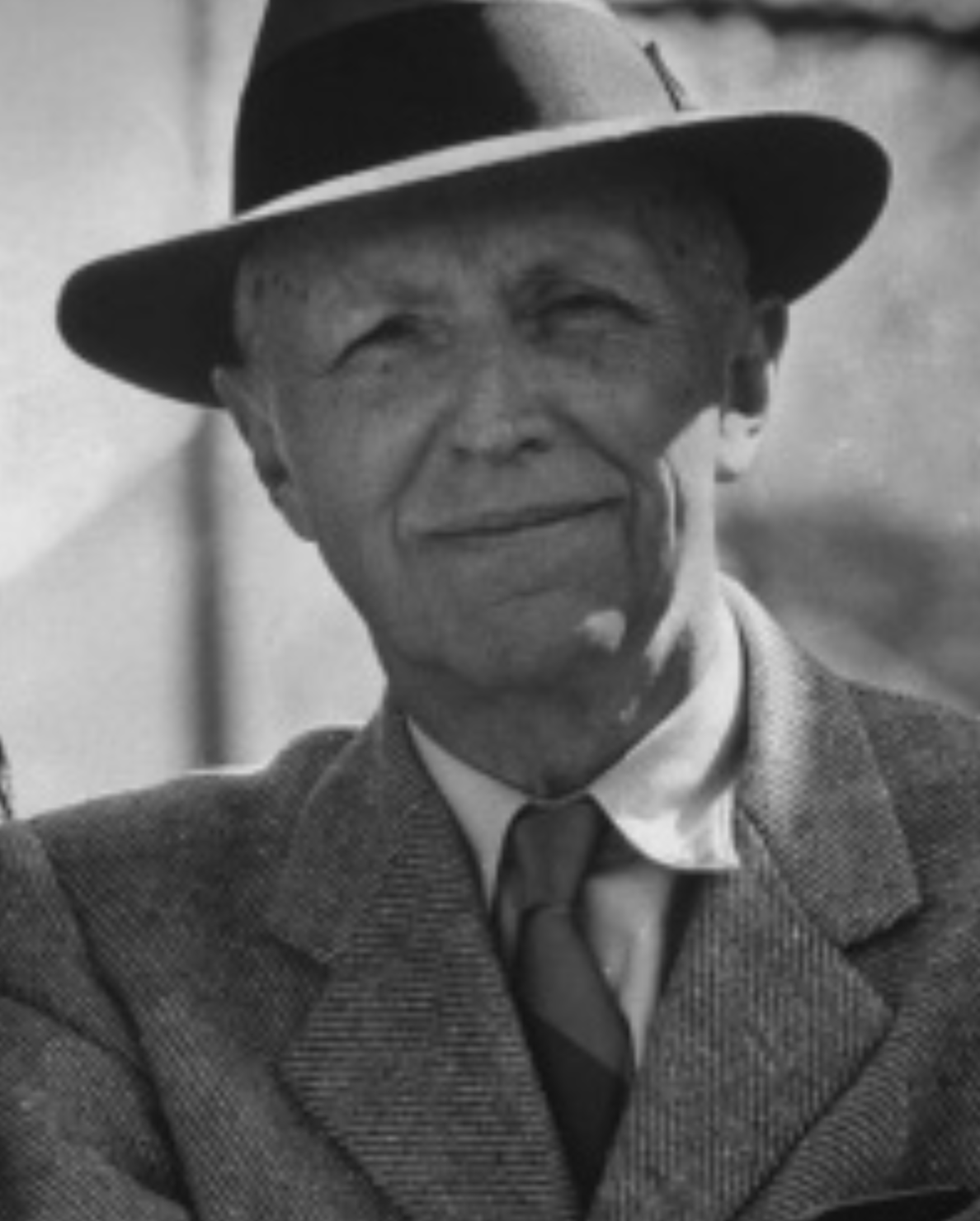
The novelist Conrad Richter was born today in 1890 in Pine Grove, Pennsylvania. The child of preachers, his family hopscotched coal-mining towns with extended members working as soldiers, country squires, blacksmiths, and farmers.
“I think that in my passion for early American life and people,” Richter said, “I am a throwback to these people.”
Richter moved to New Mexico just ahead of the Great Depression, turning out his first novel, The Sea of Grass (1936). The work is rife with pioneer life in the Southwest, its land and folklore. Richter went on to produce his Ohio trilogy, known as The Awakening Land, featuring The Trees (1940), The Fields (1946), and The Town (1950), which won the Pulitzer Prize.
Richter long struggled with a sense of disappointment for having never achieved the level of popular writerly success he had hoped. After sales figures of The Trees failed to reach projected heights, his close friend and editor Alfred A. Knopf wrote to him:
“I think you must reckon the archaic language which you deliberately adopted a commercial handicap. I don’t question its artistic advisability mind you, but I think you must reckon on the sacrifice involved. I think also that The Trees suffered rather from lack of action and story, and gave the reader not enough narrative to bite into and something of the impression of being an overture rather than the main show.”
An excerpt from his 1940 work, The Trees, reads, “Everywhere she went the trees stood around her like a great herd of dark beasts. Up and up shot the heavy butts of the live ones. Down and down every which way on the forest floor lay the thick rotting butts of the dead ones. Alive or dead, they were mostly grown over with moss. The light that came down here was dim and green. All day even in the cabin you lived in a green light.”
 Caroline M Cooper